The Modern Cockney Festival has been represented in multiple news publications such as BBC, The Times and LBC. We’d love for you to give them a read by following the links below and celebrate the Cockney euphoria with us.
https://www.lbc.co.uk/article/cockney-culture-divided-britain-opinion-5HjdWqw_2
https://www.bbc.co.uk/news/uk-england-london-68408825
https://www.standard.co.uk/news/uk/speak-cockney-day-rhyming-slang-london-b1142115.html
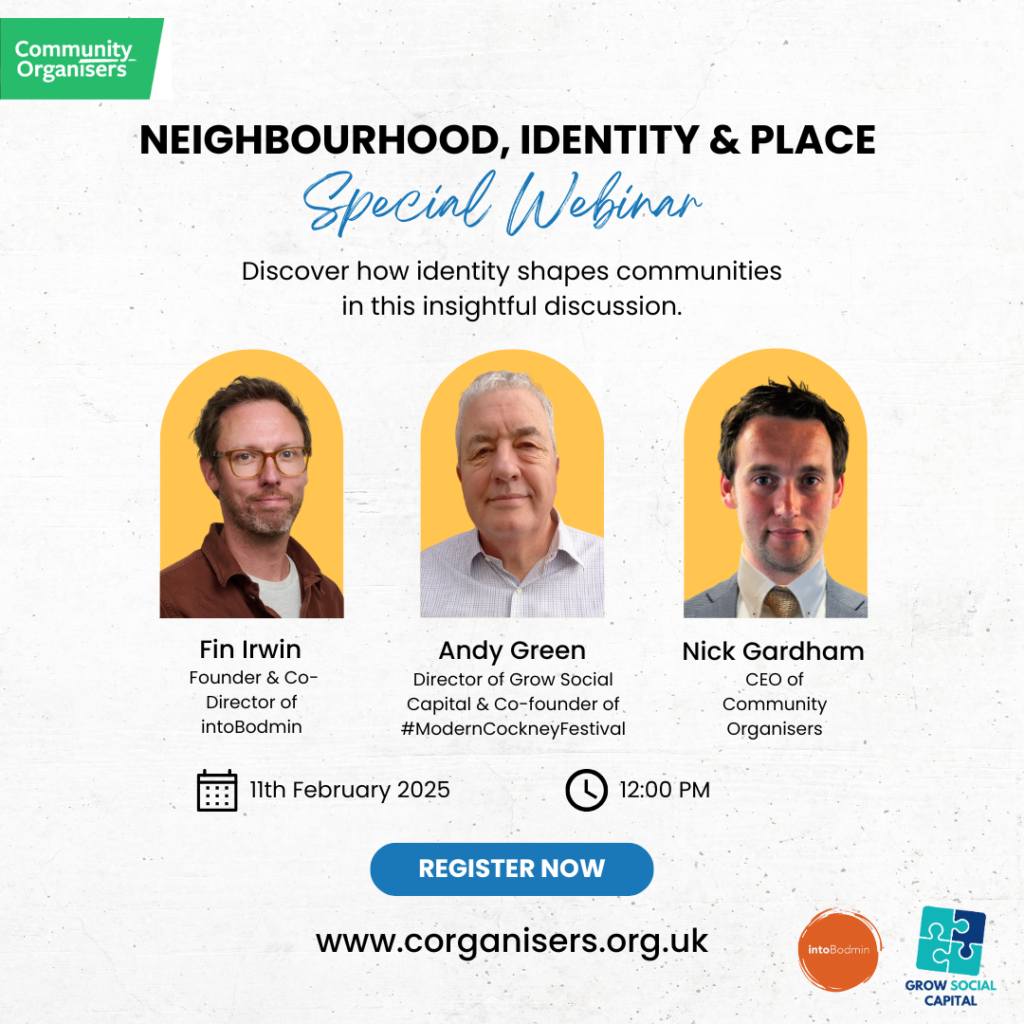
Neighbourhood, Identity & Place: A Community Webinar
Join us on Tuesday, 11th February at 12:00 for a discussion on how identity shapes communities. Hosted by Community Organisers, this webinar brings together local leaders to explore the power of place-based organising.
BBC Radio 4 shares our story
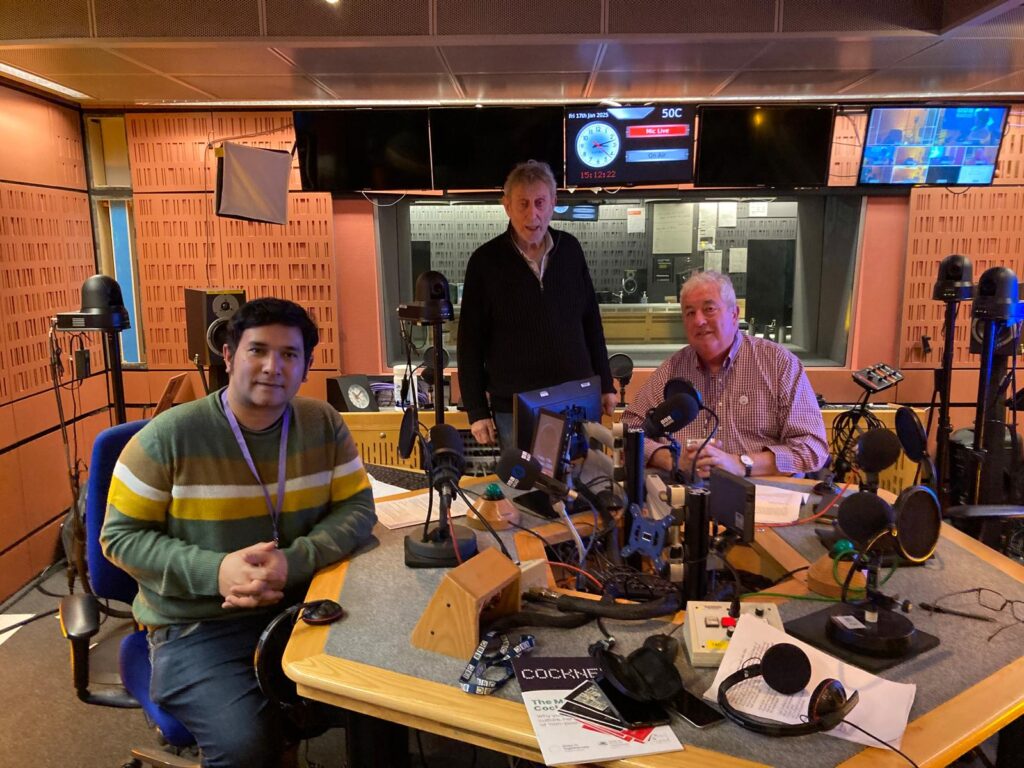
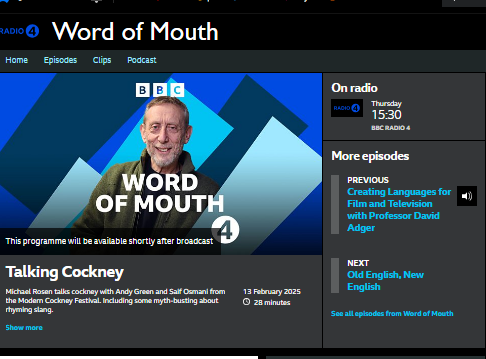
Grow Social Capital’s community partnership project, the Modern Cockney Festival was featured in a special edition of BBC Radio 4 ‘Word of Mouth’ show hosted by poet and author Michael Rosen.
Cofounders of the Modern Cockney Festival, Grow’s Andy Green and Saif Osmani from the Bengali East End Heritage Society shared the story about their campaign that celebrates the culture, heritage, and identity of featured of ‘non posh Londoners’.
Heartening to witness the significance of our campaign being recognised and reaching out
to a global audience.
The recording was extra special for Saif, for it turned out that he and his dad are massive fans of Michael’s work.
The show is the latest landmark in the campaign that has succeeded in gaining the first-ever
formal recognition of Cockney as a culture in its 660-year history, a successful research collaboration with the University of Warwick, and is seeking Protected Food Status for the traditional Cockney dish of Pie’n’Mash.
Do listen in and hear for yourself the story behind our campaign here:
https://www.bbc.co.uk/sounds/play/m0027tx6
Spread the word of mouth about our mission and make a date with the Festival events.
If you are interested in finding out how Grow Social Capital can be a partner to your community, do get in touch.
The Modern Cockney Festival
A month-long celebration of London’s non-posh Cockney heritage as a living, evolving identity.
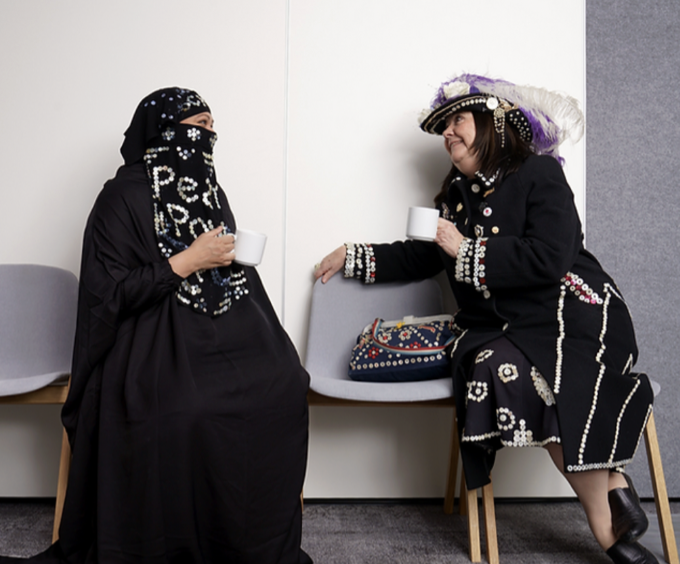
March 2026: The Modern Cockney Festival returns with a packed programme of talks, performances, exhibitions, walks and community events celebrating London’s non-posh heritage, not as nostalgia, but as a living, evolving identity shaped by generations of migration, resilience and creativity.
Running throughout March across inner London and online, the festival explores how Cockney identity has continually adapted and expanded, influenced by successive waves of newcomers and shifting social change. At a time when questions of identity and belonging dominate national conversation, the festival offers a positive and grounded perspective that local culture can build confidence, connection and togetherness.
Rather than asking whether “Cockney is dying”, the festival asks how it is changing and who gets to define it.
Festival highlights:
Until Weds 25 Mar – Being Cockney: An Intimate Lens (Free)
6:15pm–8:30pm | Rich Mix, E1 6LA
The exhibition opening presents Where You’re Supposed To Be, a series by photographer Eileen Jamieson documenting her father John and their shared Cockney identity. Alongside, British-Bangladeshi artist Saif Osmani reflects on how the Modern Cockney Festival has grown into a platform for human reconnection.
Thu 5 Mar – The Changing Voice of Cockney (Free)
12:00pm–1:00pm | Online
Linguist Dr Christopher Strelluf (University of Warwick) and Jonnie Robinson (British Library) challenge claims that Cockney is dying, showing instead how it evolves into forms like Estuary English and London English, and what these shifts mean for identity.
Thu 5 Mar – I, Minnie Lansbury (£5.50)
7:00pm–8:15pm | Tate Institute, Silvertown
A rehearsed reading of a one-act play by Bren Gosling brings to life Minnie Lansbury’s fight for social justice in the wake of World War I and expanded voting rights. With costume and storytelling, it honours an East End activist who challenged entrenched privilege.
Sat 7 Mar – ‘Cockneygami’, Design a Cockney Kilt & Rhyming Slang for Kids (Free)
11:00am–3:00pm | London Museum Docklands
Family fun workshop with origami expert Toshiko, artist Saif Osmani and the Pearly King of Woolwich. Kids can design their own Cockney-themed garments, from kilts to Pearly bowler hats, and learn about the secret language of Cockney rhyming slang. No pre-booking required.
Mon 16 Mar – The Battle of Cable Street – 90th Anniversary Event (Free)
12:30pm–1:45pm | Online
Join author and broadcaster Michael Rosen with community activists Dr Abdullah Faliq and Glyn Robbins to explore the myths, realities and modern lessons of the 1936 Battle of Cable Street, when East Enders united against fascism.
Wed 18 Mar – In Search of the Pearly Moon of Eid (Free)
12:30pm–1:30pm (Online talk) | Online & Thurs 19 Mar in-person gathering
The panel brings together members of the Moonsighters Academy and New Crescent Society to discuss how Eid dates can differ between mosques, the evolution of Eid celebrations in London, and the significance of hyper-local moon sightings. The day after the talk, participants are invited to an in-person moon-sighting gathering in East London.
The event highlights a side of Cockney identity often overlooked, demonstrating how Muslim Londoners are part of an evolving tradition that has always absorbed new influences while retaining its distinct voice.
Thu 19 Mar – Cockney Roots — How to Discover Your Cockney Ancestors (Free)
12:30pm–1:45pm | Online
Genealogist Patricia Sears MSc guides you through researching family history and uncovering Cockney ancestry, with tips on where to start and how to navigate tricky records.
Fri 20 / Tue 24 / Thu 26 Mar – Walk the Poplar Rates Rebellion (Free)
Various times | Poplar Rates Rebellion Mural, Hale Street, Poplar
A one-hour guided walking tour tracing the 1921 Poplar Rates Rebellion and its legacy. Follow the paths of jailed councillors, discover historic sites including the old workhouse and socially conscious baths, and hear how their fight for fairness still resonates.
Mon 23 Mar – Transforming The Stories Of Us (Free)
5:30pm arrival / 6pm–8pm | Museum of the Home, Hoxton
Join author and environmental campaigner Caroline Lucas for a thought-provoking talk on how museums and culture shape national narratives. Includes exclusive tours of the Story of Cockney in 50 Objects and explores how inclusive storytelling can reshape history.
Wed 25 Mar – Nellie Cressall: A New Opera (Free)
6:30pm–7:15pm | Oxford House, Bethnal Green
Celebrate the launch of this ambitious opera project that will tell the story of Nellie Cressall, the working-class suffragist and councillor jailed six months pregnant for resisting unfair rates. Hear from the creative team, watch a short film, and enjoy live music and storytelling.
About the Festival
The Modern Cockney Festival celebrates London’s non-posh heritage as a living, evolving culture. It creates space for people to explore their roots, language and stories, while recognising that Cockney identity has always been diverse, shaped by migration, resilience and reinvention.
Cockney is not simply a geography, but a social and cultural identity that has influenced language, humour and working-class life across London and the South East. From the Matchgirls to Cable Street to Pearly Moon for the start of London Eid, its legacy continues to shape modern Britain.
Rather than looking backwards to a mythical past, the festival asks what it means to belong today and how shared stories can help build a more confident and connected society.
When: 1-31 March 2026
Where: Across East London and online
Tickets and information: https://www.tickettailor.com/events/moderncockneyfestival
Festival celebrates Essex’s 1.3 million Cockney roots with call to overcome snobbery
- Essex the UK’s largest Cockneyheritage region outside of London with an estimated 1.3 million* – more than two out of three residents – with Cockney roots.
- Call for ‘Cockney Diaspora’ to overcome snobbery around their Cockney roots
- Free event to trace Cockney family roots
A call out is being made to the two out of three Essex people with Cockney ancestry to connect with their heritage as part of the Modern Cockney Festival and overcome social snobbery around their roots.
Essex is the UK’s largest Cockneyheritage regions outside of London, home to an estimated 1.3 million with Cockney roots.
For centuries Essex has been a destination for migrants moving out from London seeking a better environment and living conditions, such as the Huguenot silk weavers settling around the Braintree area in the 18th century. The extension of the District Line in the 20th century and other train commuter lines accentuated outward migration from London.
Postwar overspill estates such as in Harlow, Basildon, and Debden relocated tens of thousands of inner London Cockneys. Housing affordability pressures from the 1970s onwards pushed families outward along rail corridors, along with what is known as ‘chain migration’, where one generation moves and the next follows, reinforcing cultural continuity.
Linguistic studies reveal traditional Cockney speech features remain strongest in Essex, particularly in Loughton, Debden, Harlow, Basildon, and Thurrock.
Festival organisers are making a special effort to connect with Essex’s ‘Cockney Diaspora’ with a free online event, ‘Cockney roots – ‘How to discover your Cockney ancestors’ at 12.30pm on Thursday March 19th enabling anyone to discover more about their connections and stories of their Cockney grandparents, great grandparents, and beyond.
Leading genealogist Patricia Sears, a member of the Register of Qualified Genealogists (RQG), will provide valuable tips of where to start, clever shortcuts to avoid frustrating wastes of time, along with useful sources of help and guidance.
Tickets for the free event are available here: https://www.tickettailor.com/events/moderncockneyfestival
Commenting on the significance of Cockney culture and heritage for Essex, Andy Green of the Modern Cockney Festival said, “There’s a tendency for Essex people to be snobbish or dismissive about their Cockney identity – with its associations of low social status – and almost go into a denial about their roots. Essex comedian, Josh James for example, in a recent podcast revealed how he was ashamed of his accent.”
“Yet a Cockney identity connects with values of being resilient and resourceful, an irreverent and stoic wit, and an amazing heritage and back story to be proud of. For modern-day Britain a Cockney heritage provides a valuable resource for overcoming adversity and social prejudice while building a greater sense of togetherness to counter growing division in our country.”
He added: “Essex has become London’s cultural echo – but with its own identity – but shouldn’t be ashamed of its Cockney roots.”
The Modern Cockney Festival celebrates the culture, heritage and identity of the estimated 4 million Cockneys, or ‘non-posh Londoners’, across London, the Southeast, and beyond.
It uses a definition of Cockneys coined by broadcaster and comedian Arthur Smith as ‘non-posh Londoners’. It encourages anyone with an affinity with Cockney identity to discover more about their culture, heritage, and identity.
Featuring events including live opera, poetry, theatre, art, photography, literature, museum family fun days, walking tours and online talks, the festival covers topics from when to celebrate Eid in London and the Southeast, politics, sociolinguistics, the 90th anniversary of the Battle of Cable Street, the Cockney cuisine of Pie’n’Mash, along with the launch of a virtual museum of modern Cockney.
Celebrating an evolving identity based on inclusive values that spans diverse backgrounds, beliefs, cultures, geography – from its traditional inner London heartlands with a Cockney Diaspora across the Southeast of England – the Festival challenges traditional perceptions and negative stereotypes while offering new ways of inspiring people to connect with their heritage and regional identities in Britain.
The Festival identifies four types of Cockney: ‘Old School’ characterised by traditional stereotypes of accent and rhyming slang, ‘New School’ from a more diverse range of global backgrounds, the ‘Cockney Diaspora’ found mainly
across the Southeast of England away from its traditional inner London heartlands, and ‘Ancestral Cockneys’, like actors Charles Dance or Helen Mirren, who have strong and inspiring Cockney family roots.
Now in its third year, the Festival is run by a community partnership between the Benali East End Heritage Society and social enterprise Grow Social Capital CIC on zero budget, resourced by volunteers, partnerships and Cockney community spirit and values. Further details about the Festival can be found at https://moderncockneyfestival.co.uk/.
Festival celebrates Kent and Medway’s 440,000 Cockney roots with call to overcome snobbery
- Kent and Medway one of the UK’s major Cockneyheritage regions with an estimated 440,000 people* with Cockney roots, second only, outside of London, to Essex.
- Call for ‘Cockney Diaspora’ to overcome snobbery around their Cockney roots
- Free event to trace Cockney family roots
A call out is being made to the one in four people in Kent and the Medway with Cockney ancestry to connect with their heritage as part of the Modern Cockney Festival and overcome social snobbery around their roots.
Kent and Medway are one of the UK’s major Cockneyheritage regions outside of London, second only to Essex, home to an estimated 400,000 people with Cockney identities, mainly in Medway, Dartford, Gravesham, and north Kent.
Decades of migration from London’s inner heartland have brought communities with distinctive accents, traditions of humour, solidarity, food, such as Pie’n‘Mash and family networks, making modern Cockney heritage a defining thread in the modern story of Kent and Medway, shaping the cultural landscape of Medway, Dartford, Gravesham and the Thames Gateway.
Medway is culturally the closest to Essex in terms of East London outmigration with significant inflow from Newham, Barking, and Tower Hamlets with a multigeneration East London identity.
Thames Gateway & coastal Kent including Swale, Sheppey, parts of Thanet, coastal towns with more mixed London inflow but featuring inflow from Southwark, Greenwich, and Hackney albeit with a weaker retention of Cockney identity than Medway and northwest Kent.
Festival organisers are making a special effort to connect with the ‘Cockney Diaspora’ across southeast England with a free online event, ‘Cockney roots – ‘How to discover your Cockney ancestors’ at 12.30pm on Thursday March 19th enabling anyone to discover more about their connections and stories of their Cockney grandparents, great grandparents, and beyond.
Leading genealogist Patricia Sears, a member of the Register of Qualified Genealogists (RQG), will provide valuable tips of where to start, clever shortcuts to avoid frustrating wastes of time, along with useful sources of help and guidance.
Tickets for the free event are available here: https://www.tickettailor.com/events/moderncockneyfestival
Commenting on the significance of Cockney culture and heritage for Kent and the Medway, Andy Green of the Modern Cockney Festival said, “There’s a tendency for people in the Kent and Medway areas to be snobbish or dismissive about their Cockney identity – with its associations of low social status – and almost go into a denial about their roots.”
“Yet a Cockney identity connects with values of being resilient and resourceful, an irreverent and stoic wit, and an amazing heritage and back story to be proud of. For modern-day Britain a Cockney heritage provides a valuable resource for overcoming adversity and social prejudice while building a greater sense of togetherness to counter growing division in our country.”
The Modern Cockney Festival celebrates the culture, heritage and identity of the estimated 4 million Cockneys, or ‘non-posh Londoners’, across London, the Southeast, and beyond.
It uses a definition of Cockneys coined by broadcaster and comedian Arthur Smith as ‘non-posh Londoners’. It encourages anyone with an affinity with Cockney identity to discover more about their culture, heritage, and identity.
Featuring events including live opera, poetry, theatre, art, photography, literature, museum family fun days, walking tours and online talks, the festival covers topics from when to celebrate Eid in London and the Southeast, politics, sociolinguistics, the 90th anniversary of the Battle of Cable Street, the Cockney cuisine of Pie’n’Mash, along with the launch of a virtual museum of modern Cockney.
Celebrating an evolving identity based on inclusive values that spans diverse backgrounds, beliefs, cultures, geography – from its traditional inner London heartlands with a Cockney Diaspora across the Southeast of England – the Festival challenges traditional perceptions and negative stereotypes while offering new ways of inspiring people to connect with their heritage and regional identities in Britain.
The Festival identifies four types of Cockney: ‘Old School’ characterised by traditional stereotypes of accent and rhyming slang, ‘New School’ from a more diverse range of global backgrounds, the ‘Cockney Diaspora’ found mainly across the Southeast of England away from its traditional inner London heartlands, and ‘Ancestral Cockneys’, like actors Charles Dance or Helen Mirren, who have strong and inspiring Cockney family roots.
Now in its third year, the Festival is run by a community partnership between the Benali East End Heritage Society and social enterprise Grow Social Capital CIC on zero budget, resourced by volunteers, partnerships and Cockney community spirit and values. Further details about the Festival can be found at https://moderncockneyfestival.co.uk/.
Futures Report Launch
Urgent action needed to save one of Britain’s oldest regional food traditions, campaigners warn today, as a new report reveals the mounting pressures threatening the future of Pie’n’Mash.
- Report calls for new 7-point plan for a sustainable future for regional foods like Pie’n’Mash
- Comedian Rob Beckett calls for supporting the campaign
- Campaigners warn of Engbland if local culture and traditions are lost
An urgent call to secure the future of Britain’s traditional foods is being made in a new report ‘Pie’n’Mash futures’, presenting a seven-point plan for a sustainable way ahead.
Once London’s original fast food, Pie’n’Mash is woven into Cockney identity and heritage. Although historically rooted in inner London, the ‘Cockney diaspora’ has pushed the cuisine across the Southeast, with more shops now outside the capital than within it.
Online sales, pub partnerships and outdoor catering have helped broaden its reach nationwide – but challenges remain of falling High Street footfalls, rising costs, intense competition from international global fast-food chains, and fingerfriendly takeaway options.
Produced for the Modern Cockney Festival’s National Pie’n’Mash Week (March 9-15th ), the report highlights how the Pie’n’Mash sector needs to play to its strengths of:
- Quality, artisan, hand-crafted food, often freshly made on the premises.
- Cultural heritage dating back over 140 years with an iconic association with Cockney culture
- A fiercely loyal and passionate fan base, including more than 50,000 online supporters
- Producers who care about their product, traditions, and communities, many with a family heritage spanning up to four generations.
Comedian Rob Beckett shares his passion for the food in the report writing, “Enjoying Pie’n’Mash is now a way for me to remember who I am, and where I’m from, it goes back to not just my roots, but my family’s before me. It has a history and a heritage that’s almost unique in London now. Let’s ensure future generations can enjoy the same privilege.”
Food historian, Professor Rebecca Earle of the University of Warwick added, “Dishes from curry to fish and chips, have their roots in the cuisines and cultures of peoples from elsewhere. Pie’n’mash likewise, emerged from this fusion of cultures, from Ireland, Italy, Britain, and beyond. These foods are history on a plate.”
Richard Holden MP, who led the first-ever debate in the House of Commons, added, “Pie’n’Mash is something that in Italy or France would instantly be recognised as worthy of celebration and preservation. In the age of global fast-food brands, Pie and Mash has shown a stubborn refusal to die, partly because the shops are absolute hubs of the local community, representing a vital part of our culture.”
Andy Green of Modern Cockney calls for a more urgent response from public bodies to securing the future of the Pie’n’Mash tradition.
Examples of inaction include the Mayor of London’s Office’s most recent cultural strategy report, ‘Culture for all Londoners’ which fails to even mention Pie’n’Mash shops, nor even use the term ‘Cockney’. Mr. Green added, “Unless public bodies adopt a more pro-active approach, we risk creating an Engbland, where local character and traditions are lost, and everywhere looking the same.”
The ‘Pie’n’Mash futures’ report contains a 7-point plan which includes:
- Gaining Traditional Status Guaranteed recognition as a Protected Food, to ensure its traditions are properly preserved and protected by law and its status celebrated.
- Greater respect and recognition from public institutions – a call out to public policy makers, academia, and cultural institutions to do more and be more pro-active.
- Pie’n’Mash shops need to embrace ‘Balanced evolution’ encouraging shops to adapt without losing authenticity.
- Create for the first time, a formal trade body for the sector.
- Mobilising the fan community to support local shops and counter declining highstreet footfall.
- A revitalised national strategy for promoting British regional foods such as Pie’n’Mash. Until campaigners raised the issue Pof Pie’n’Mash being ignored for Protected Status food, raises questions over what other British regional foods are being overlooked.
- Back the Modern Cockney Charter, a fivepoint plan produced by Modern Cockney to reframe and celebrate Cockney identity.
Copies of the ‘Pie’n’Mash futures’ report can be obtained from the National Pie’n’Mash Week website https://www.nationalpiemashweek.org.uk/march2026 from www.moderncockneyfestival.org.uk.
The Modern Cockney Festival, which includes National Pie’n’Mash Week celebrates the culture, heritage, and identity of the estimated 4 million ‘non-posh Londoners’ across London, the Southeast, and beyond.
The Festival challenges traditional perceptions and negative stereotypes while offering new ways of inspiring people to connect with their regional identities in Britain.
Featuring over 20 events including live opera, poetry, theatre, and museum family fun days, online events covering topics from when to celebrate Eid in London, politics, sociolinguistics, the 90 th anniversary of the Battle of Cable Street, and how to trace your family Cockney roots, along with the launch of its own virtual museum of modern Cockney.
New Research Shows How Community-Led Approaches Can Transform Linguistic Inequality in London
The value and impact achieved by Grow Social Capital with its community partnership in London with the Bengali East End Heritage Society delivering the Modern Cockney Festival has been recognised in an academic study by the University of Warwick entitled, ‘Reducing standard-language-ideology conflicts through participatory research in historical sociolinguistics’.
The study argues that participatory research – when communities lead and academics support – can radically reduce conflicts fuelled by standard language ideologies. Using a multiyear collaboration with Modern Cockney in East London, the paper demonstrates how historical sociolinguistics can become publicly engaged, socially impactful, and community-driven.
The study’s authors introduce the Complementary Roles Participatory Research Model (CRPRM), which repositions academics not as directors of research but as collaborators who assist and learn from community experts. This shift, they argue, opens the door for participatory methods even in fields like historical sociolinguistics, where traditional “participants” may be distant or absent.
Modern Cockney’s Pivotal Role
The study makes clear that Modern Cockney was not simply a partner – it was the engine of the project. Its community-led initiatives shaped the research questions, methods, and outcomes, producing insights that academic researchers alone may not have uncovered.
Key contributions by Modern Cockney include:
- Reframing Cockney identity: their interviews and focus groups revealed that Cockney remains a meaningful cultural reference point for many Londoners – including young people – despite media narratives declaring it “dead”.
- Expanding Cockney identity categories: Modern Cockney identified emerging identity labels such as Bengali Cockney, Black Cockney, and Jewish Cockney, opening new avenues for community-led research.
- Challenging harmful media narratives: their work exposed how press stories about the “death of Cockney” marginalise people who still identify with Cockney heritage.
- Shifting public policy conversations: by legitimising lived experiences through linguistic evidence, the collaboration helped move Cockney identity into the political “Overton Window”, raising issues of language prejudice and social inequality on the East London policy agenda.
- Empowering community researchers: members reported feeling, for the first time, “permission to explore who I am and what my identity is,” demonstrating the personal and collective impact of the project.
Why This Matters
The study reveals how Modern Cockney’s partnership enables participatory research to:
- reduce social conflict rooted in language prejudice
- challenge institutional narratives that reinforce stereotypes
- generate new knowledge that academics would not reach alone
- create more ethical, community centred public engagement
- reshape how universities approach media, outreach, and impact
The authors conclude that the CRPRM offers a powerful new model for disciplines where participatory research has seemed impossible. By recognising the intellectual value of community-initiated, community-led research, scholars can support public outcomes that communities are already striving to achieve.
A copy of the study is here (please note, it refers to Modern Cockney’s earlier name of ‘Cockney Cultures’): https://moderncockneyfestival.co.uk/wp-content/uploads/2026/04/Cockney-Research.pdf
Commenting on the study, Andy Green of Grow Social Capital said, “The study shows a new way ahead for more profound community partnerships to discover new insights and learnings but also achieve deeper and more significant social change as a result. We hope we can build upon our Modern Cockney partnership to extend the scale and impact of our work.”
Modern Cockney: Featured in Saga Magazine
Our campaign to celebrate and protect Cockney culture is featured in the latest edition of Saga Magazine – the UK’s best-selling monthly subscription magazine for over-50s on topics ranging from health and finance to lifestyle and heritage.
What the article covers:
The feature spotlights Modern Cockney Festival co-founder Andy Green as he challenges the narrative that cockney culture is “dying”. Andy addresses the frustration of Cockney identity being omitted from official cultural plans, arguing that their heritage isn’t disappearing but simply evolving.
The piece explores how the definition of “Cockney” has moved beyond geographical boundaries. It now represents the “non-posh Londoner” defined by anyone who values resourcefulness, sharp wit and resilience. It is a set of values, not just a postcode.
The article also highlights the practical efforts to keep the dialect alive, from collaborating with sociolinguists at Warwick University and successfully persuading Tower Hamlets Council to recognise Cockney as an official community language. Teaching materials for English Language A-Level classes are being developed to ensure the next generation understands the importance of “non-standard” English.
Securing this coverage is a further example of how we are successfully spreading the message about our campaign. It allows us to elevate the conversation around regional accents and working-class identity, reaching a vast new audience and ensuring our message echoes far beyond the East End.
Cockney Culture transcends its historical roots. It remains a vibrant, evolving identity. Whether through the momentum of ‘Speak Cockney Day’ or our dedicated efforts to secure ‘protected status’ for traditional pie and mash, we remain committed to ensuring our community’s heritage is celebrated and preserved for the future.